“The Paper Forest Pavilion in the twenty first century echoes the function of structures like the Pagoda and Alhambra in the eighteenth century. But the Paper Forest also has an additional role in providing a focus for public – and particularly children-oriented – educational activities relating to conservation and sustainability.” Professor Peter Krane, director of Kew (n
Our first collaboration with Shigeru Ban
The Royal Botanic Gardens commissioned the Japanese architect Shigeru Ban in collaboration with Gumuchdjian Associates and Buro Happold engineers to propose designs for a new Activity Centre at the heart of the Gardens’ conservation area.
As well as hosting activities concentrating on exploring issues of sustainability of British Nature the building will act as focus for education, and interpretation of sustainability projects world-wide. The Paper Forest Pavilion will provide shelter and support for year-round activities in an area that currently lacks shelter and services.
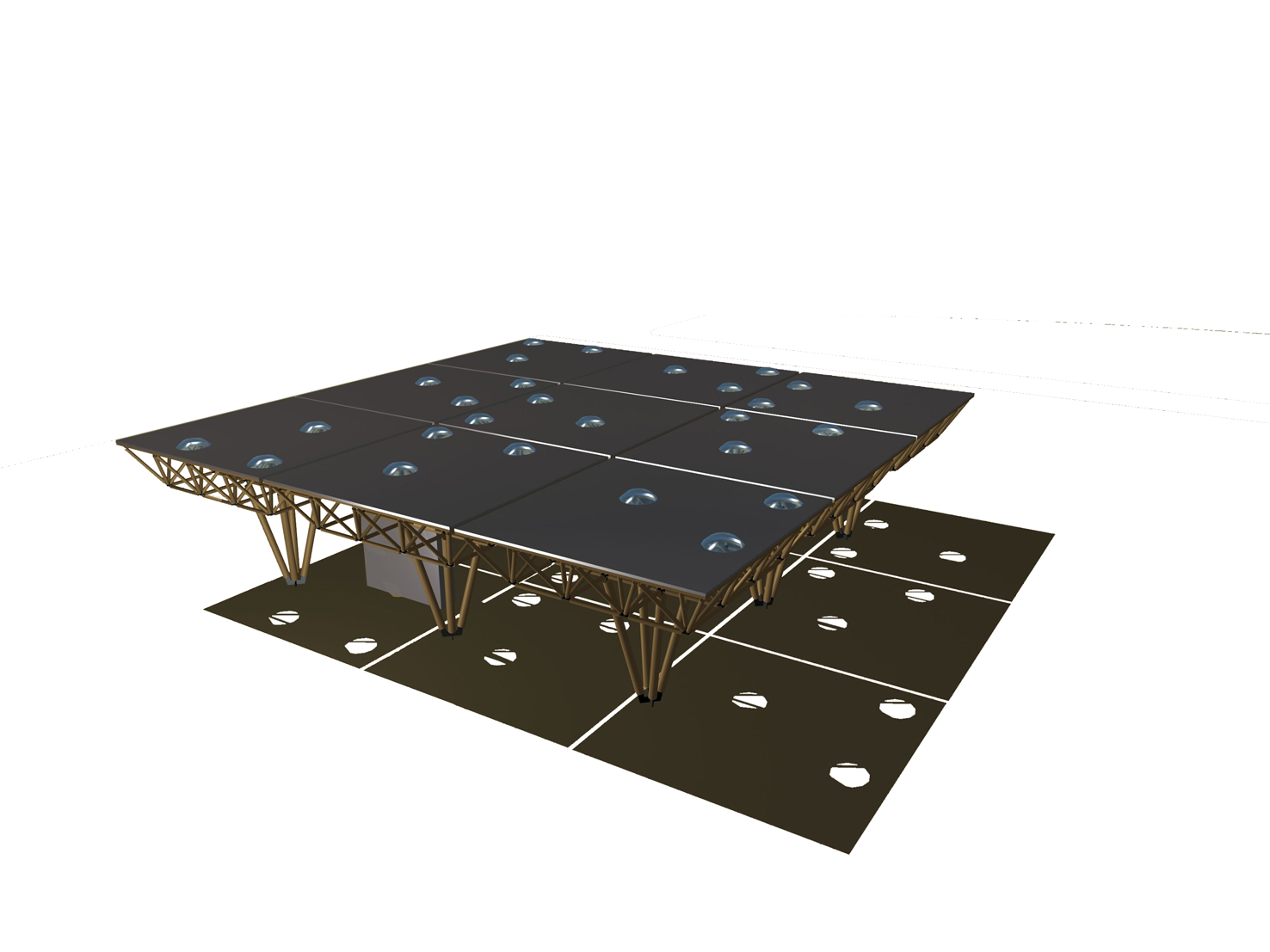
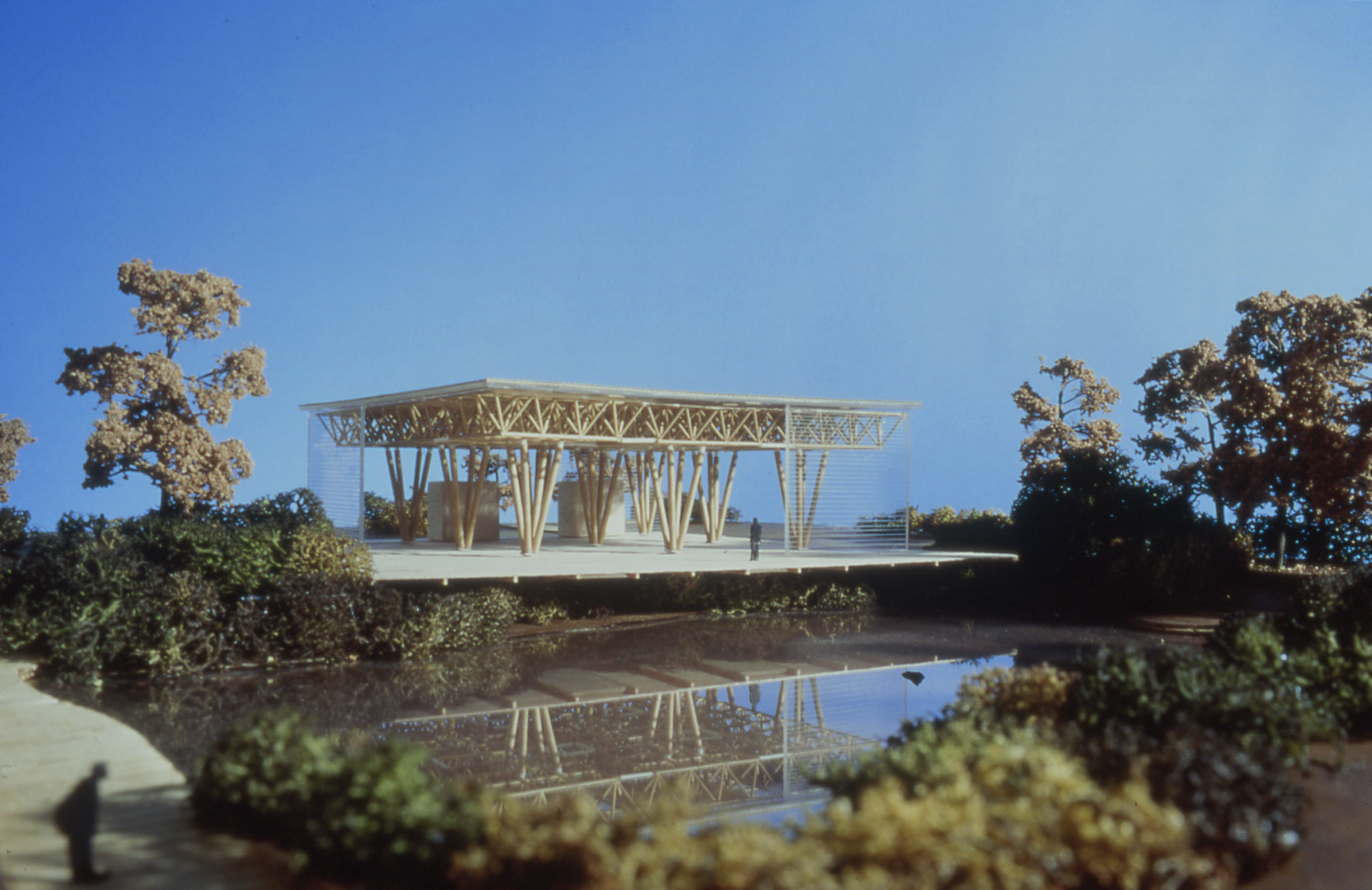
In response to the sensitive natural and historical setting, the design team proposed a lightweight, energy autonomous, Paper Pavilion. The building’s structure is made of recycled cardboard paper tubes and in its form deliberately echoes its woodland setting. Designed as a modular system of cardboard tree columns and branching space frame cardboard roof structures, the building reads as a canopied Paper Forest within the Gardens.
Every element of the design and its organisation within the landscape responds to the opportunities that exist to create a demonstrably sustainable structure. The building is sited overlooking the exquisite Waterlily Pond, from which it will draw cool fresh air in the summer and into which it will store rainwater from its roof. In Summer its southern facades will be protected from the sun by a belt of fast growing bamboo, whilst its protective lightweight roof will direct shafts of sunlight into the Pavilion, creating the dappled feel of light of the natural forest.
Giant sliding screens made of paper, fabric and polycarbonate protect the Paper Forest from the wind and rain and create a naturally tempered environment within. Roof, screens, timber floor and outlook will create a building whose feel will reflect a contemporary interpretation of traditional Japanese architecture.
The design has already won critical acclaim, recently being awarded a commendation in the AJ/Bovis Award for the best architecture in the Royal Academy, and the Royal Botanic Gardens are currently seeking funding to transform it into a building.

Project images